
Statistical Surveys "Without You, It Doesn't Count"
About the work of interviewers
Similarly to the other 15 regional statistical offices, the Statistical Office in Szczecin employs interviewers. These are permanent, full-time staff members who conduct statistical surveys in sampled households, covering multiple aspects of our daily lives.
Anyone can find out more about these statistical surveys by visiting the Statistics Poland website under the Surveys section, and then selecting the Statistical Surveys tab.
Statistical surveys are conducted both on a continuous basis (every month) and at regular intervals (quarterly, annually, or every few years).
In the fouth quarter of 2026, the following surveys are being conducted: :
- Labour Force Survey – LFS (BAEL) – conducted on a continuous basis
- Household Budget Survey – HBS (BBGD) – conducted monthly
- Household Condition Survey – HCS (KGD) – conducted monthly
- Participation of Polish residents in domestic trips as well s abroad – from 1 to 20 October
- Household Wealth and Debt Survey (BZDG) – from 30 October 2026 to 31 January 2027
- Swine population and pork production survey (R-ZW-S) – from 0 to 23 December
- Poultry population and livestock survey (R-ZW-B) - from 0 to 23 December
Are surveys conducted by phone or in person?
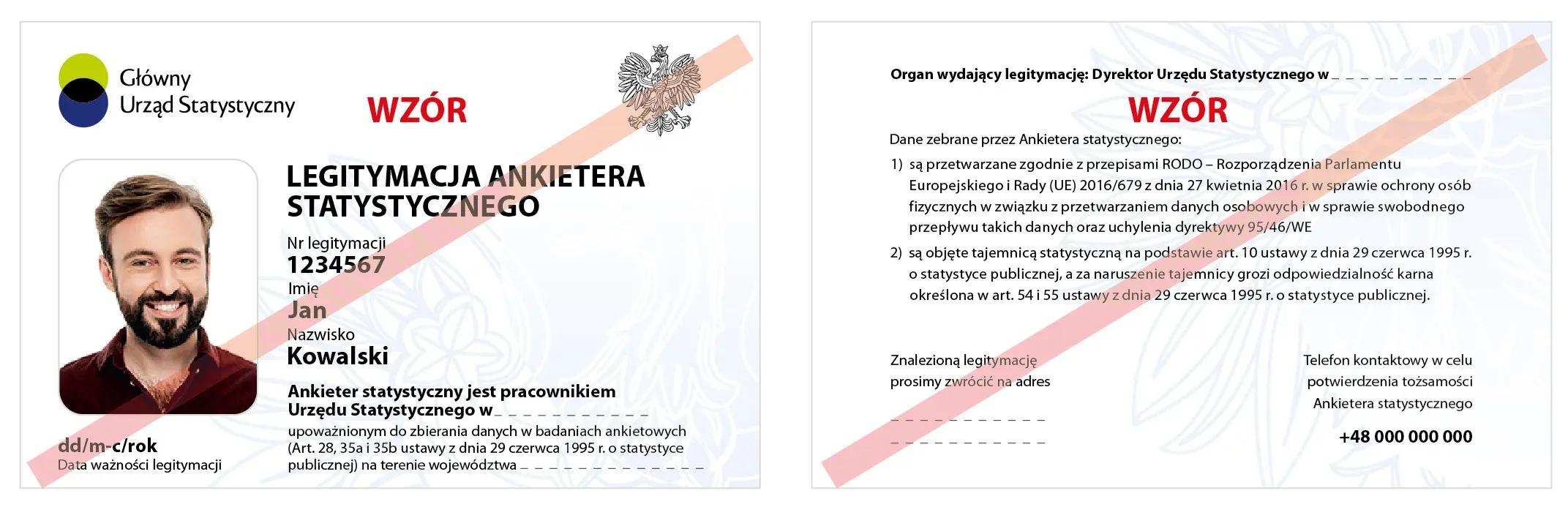
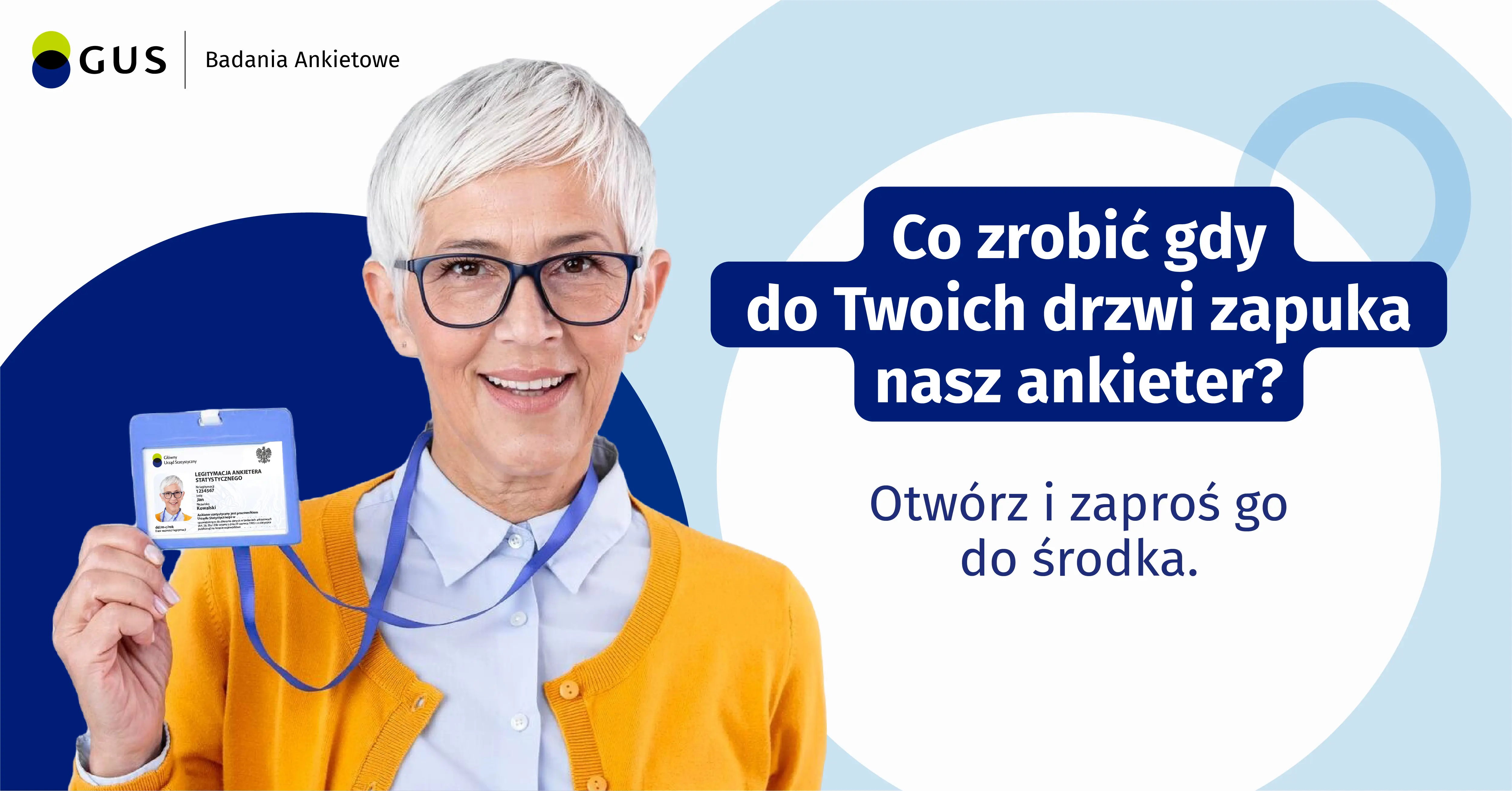
The methodology of each survey requires an interviewer to visit the household living at the address selected for the survey. The interviewer must introduce themselves by first name and surname, and present their official interviewer ID card displaying their identification number.
The ID card is the size of a standard identity card and includes a photograph.
Some surveys are conducted exclusively by phone. When calling a respondent, the interviewer will introduce themselves, provide their official ID card number, state the purpose of the call, and verify whether the person they are speaking with resides at the sampled address. The interviewer is required to conduct the interview solely with respondents living in the dwelling sampled for the specific survey. The methodology of statistical surveys does not permit interviewing random respondents.
How to verify an interviewer's identity?
Anyone approached by an interviewer has the right—and indeed the duty—to verify their identity. We are all aware of how many fraudsters live among us. The police regularly warn against scams involving individuals posing as grandchildren, police officers, bank employees, or "interviewers".
You can verify an interviewer in three ways:
- Online: An application called "Verify the interviewer's identity" is available on the Statistics Poland website under the Surveys → Statistical Surveys tab: https://badania-ankietowe.stat.gov.pl/sprawdz-tozsamosc-ankietera. You need to enter the interviewer's first name, surname, and official ID card number or a number of phone from which they called. The system will confirm whether the person posing as an interviewer is indeed an employee of the respective statistical office (for the Zachodniopomorskie Voivodship, this will be the Statistical Office in Szczecin).
- By Phone (Infoline): The Statistical Infoline is available from Monday to Friday between 8:00 am and 3:00 pm at +48 22 279 99 99. By providing the interviewer’s name, ID card number, and the phone number from which they called, you can confirm their identity.
- Direct Contact: You can also call the Head of the Survey Division at the Statistical Office in Szczecin directly on landline numbers +48 91 459 75 48 or +48 505 14 64 68, or contact the Secretariat of the Statistical Office in Szczecin at +48 91 459 77 00.
Interviewers usually work individually, unless they are training a new employee in the complexities of fieldwork.
Can I refuse to participate in the survey?
Yes, you can; however, providing information is extremely important. Various statistical surveys deliver essential data for a wide range of beneficiaries. For instance, the Labour Force Survey (LFS) provides key data for labour market analysis, helping to shape social and economic policies. Since 1992, the Labour Force Survey has monitored changes in the Polish labour market. Every quarter, it provides reliable data on the situation of employed, unemployed, and economically inactive persons. It serves as the primary source of data used to construct labour market indicators, including those for international comparisons. Consequently, it forms the basis for strategic decision-making at national, regional (voivodship), and European Union levels. LFS results are used by major national and international institutions, including Ministries, Central Offices, the National Bank of Poland (NBP), the European Central Bank (ECB), the International Labour Organization (ILO), the UN, UNESCO, the OECD, the World Bank, the IMF, universities, research institutions, and the media.

When respondents describe their household's situation, they participate in creating official statistics. These statistics make it possible to track trends and changes in the economy and society. On their basis, the government, local authorities, and entrepreneurs make decisions concerning areas such as employment, education, social care, and healthcare. By participating in surveys, everyone has an impact on the changes occurring in their immediate surroundings.
Due to the specific methodology of the surveys, it is vital that the randomly selected respondent takes part in the survey, rather than a neighbour or any other person. Any refusal to participate requires the interviewer to relocate to another randomly selected substitute address.
Is participating in the survey safe?
An individual approached by an interviewer, whilst fulfilling their civic duty, should not refuse out of concern for their data, as all information requested by the interviewer is strictly protected by statutory statistical confidentiality. This means that information regarding a household and its members, once stripped of any identifying features, can be used exclusively for statistical studies, compilations, and analyses. Published data only comprise aggregate survey results, never individual responses from respondents.
An interviewer will never ask for sensitive personal data, such as your surname (during telephone validation), ID card details, PESEL (National Identification Number), bank account numbers, or any personal passwords.

An interviewer does not collect money and will never ask you to transfer any amount of money to a bank account. On the contrary, in certain surveys, interviewers hand out a small gift to respondents as a token of appreciation for their participation (in the Zachodniopomorskie Voivodship in 2026, this is a towel set or an umbrella).
If a person claiming to be an interviewer starts asking for a PESEL number, bank account details, or personal passwords, a "red flag" should immediately go up. Any such attempted fraud must be reported to the police without delay.
However, you should not be surprised by the following questions:
- Whether the respondent lives at the sampled address provided by the interviewer (in the case of telephone interviews);
- Age or date of birth, educational attainment level, whether the respondent is employed, unemployed, or economically inactive, as well as the amount and sources of income.
These questions are necessary to weight, aggregate, and break down the collected data into various categories, such as sex, age, place of residence, or labour market status.
Please remember that if an interviewer calls you, you can always request to change the format of the interview from a telephone call to an in-person visit.
The interviewer will adapt to the respondent's needs, not the other way around.
Currently, our interviewers may be contacting you to conduct, among others, the Labour Force Survey – LFS (BAEL).
Find out more about this survey from the attachments below.